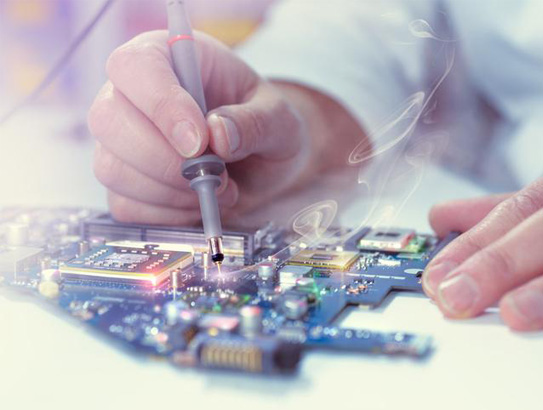
Electrical & Electronics Engineering (EEE)
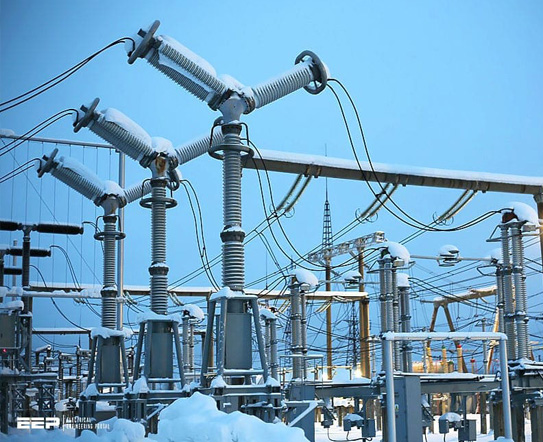
About the Department
The Department of Electrical and Electronics Engineering (EEE) was established in 2011 with a mission to develop technically skilled professionals who can design, develop, and manage electrical systems that power the modern world. The department combines the fundamental principles of electrical science with cutting-edge electronic applications, enabling students to understand both traditional power systems and advanced automation technologies.
The department is supported by highly qualified and experienced faculty members who emphasize practical learning through laboratory experiments, industrial visits, and real-time projects. The EEE department has grown into a center of excellence, preparing students to meet the challenges of a rapidly evolving power and electronics industry.
About the Course
The Diploma in Electrical and Electronics Engineering is a three-year program (with lateral entry to the second year) designed to impart knowledge in electrical machines, power systems, control systems, and modern electronics. Students gain insights into energy generation, transmission, and utilization, along with digital electronics and automation. The course also provides exposure to renewable energy, industrial electronics, and programmable logic controllers (PLC), equipping graduates for versatile career roles across industries.
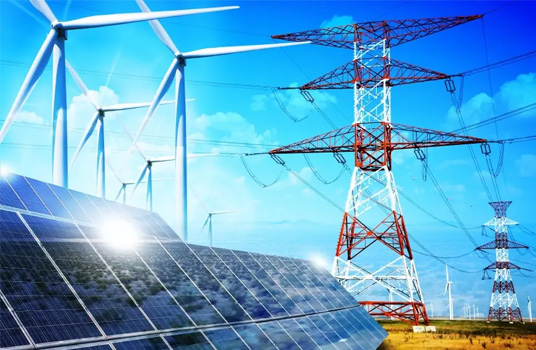



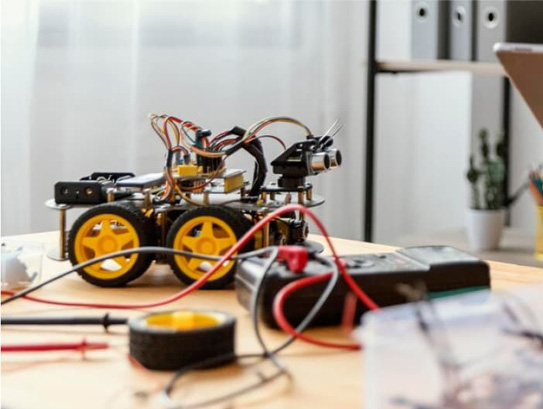
About the Curriculum
The curriculum, prescribed by the Directorate of Technical Education (DOTE), Chennai, focuses on both foundational and specialized subjects in the electrical and electronics domains. Core areas include:
- Electrical Machines & Drives
- Circuit Theory and Network Analysis
- Power Systems and Switchgear
- Digital and Analog Electronics
- Microprocessors and Microcontrollers
- Control Systems and Power Electronics
- Programmable Logic Controllers (PLC) and Industrial Automation
- Computer-Aided Electrical Drawing and CAD Applications
Each semester integrates classroom learning with practical sessions and mini-projects to help students apply theoretical concepts to real-world engineering systems.
Mission
- To deliver high-quality technical education in the field of Electrical and Electronics Engineering.
- To foster innovation, research, and entrepreneurship among students.
- To produce competent technologists capable of contributing to the sustainable energy sector.
- To build values of discipline, teamwork, and social responsibility through continuous improvement in teaching and learning.
Vision
To emerge as a centre of excellence in Electrical and Electronics Engineering by empowering students with technical knowledge, research aptitude, and leadership qualities to meet global energy and technology challenges.
About the Laboratories
The EEE department is equipped with modern, AICTE-approved laboratories designed to provide practical experience and industry-oriented training. Major labs include:
Electrical Machines Lab
Experiments on DC and AC machines, transformers, and alternators.
Power Electronics Lab
Study of converters, inverters, and semiconductor devices.
Control Systems & Instrumentation Lab
Design and simulation of control circuits.
Electrical Workshop
Hands-on experience in wiring, installation, and maintenance.
PLC & Automation Lab
Real-time programmable logic controller training.
Microprocessor & Microcontroller Lab
Embedded system programming and interfacing.
CAE/CAD Lab
Electrical drawing and circuit design using computer applications.
Career Opportunities
The diploma in EEE opens a gateway to numerous career paths in both public and private sectors. Graduates can work as:
- Electrical Supervisor / Technician in power generation and distribution companies.
- Maintenance Engineer / Service Engineer in industrial automation firms.
- Instrumentation Technician / PLC Operator in manufacturing and process industries.
- Assistant Engineer in government sectors such as TNEB, PWD, and Railways.
- Testing and Quality Engineer in electrical equipment and product manufacturing companies.
- Entrepreneur / Contractor offering electrical installation, servicing, and maintenance solutions.
Entrepreneurial students can start their own electrical contracting or service firms. For higher education, students can pursue B.E./B.Tech. in Electrical and Electronics Engineering, leading to specialized roles in renewable energy, embedded systems, and power engineering.